Location-based Mobile Interventions for Alcohol Consumption in Mexican Youth: Perceived Usefulness and Ease of Use
DOI:
https://doi.org/10.17488/RMIB.47.SI-TAIH.1560Palabras clave:
Human Computer Interaction, Mexican youth drinking, Mobile alcohol interventionsResumen
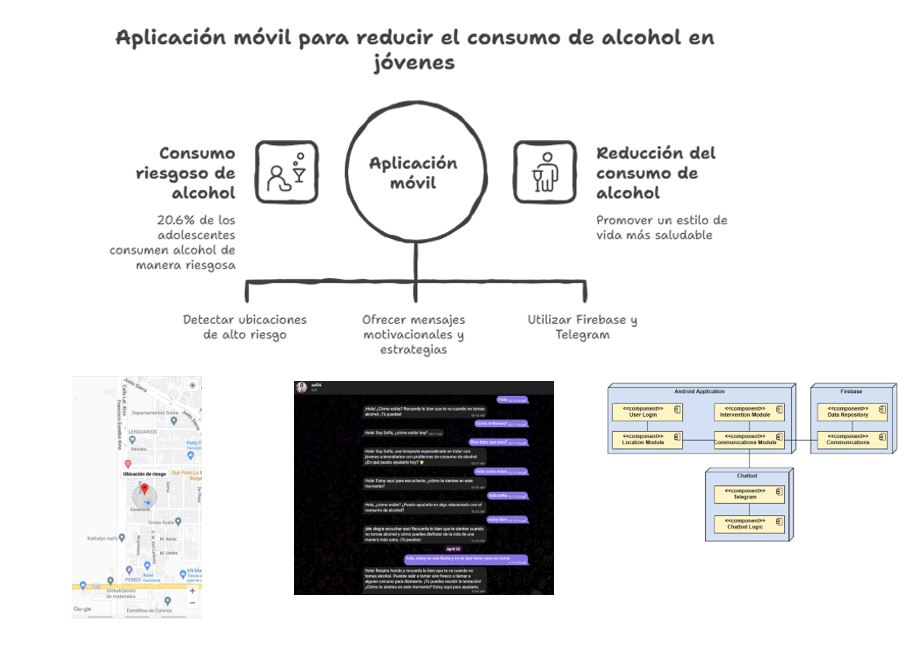
En México, abordar el consumo riesgoso de alcohol y el consumo excesivo de alcohol en jóvenes representa un desafío crítico de salud pública, con implicaciones significativas tanto para la salud física como mental. Este estudio explora el potencial de las intervenciones móviles, en particular intervenciones basadas en ubicación y gentes conversacionales, para mitigar el uso nocivo de alcohol en la población juvenil mexicana, con el objetivo de integrar estas tecnologías en los sistemas de salud existentes. Realizamos una revisión exhaustiva de la literatura sobre intervenciones de eSalud (salud móvil) y tecnologías de geolocalización, enfatizando su relevancia clínica. Aprovechando tecnologías emergentes, desarrollamos una plataforma móvil para intervenciones basadas en ubicación geográfica, diseñada para monitorear y brindar retroalimentación sobre los patrones de consumo de alcohol. Reclutamos a 38 participantes para evaluar la facilidad de uso percibida y la utilidad de la plataforma mediante el Modelo de Aceptación Tecnológica (TAM, por sus siglas en inglés). Nuestros hallazgos resaltan el papel prometedor de las intervenciones móviles para complementar estrategias clínicas tradicionales, ofreciendo apoyo personalizado a jóvenes en riesgo de desarrollar trastornos por consumo de alcohol. Además, discutimos las aplicaciones potenciales de estas tecnologías en otros trastornos psicológicos, subrayando su versatilidad en el ámbito de la salud mental. Este estudio contribuye al creciente cuerpo de evidencia que respalda la integración de tecnología en iniciativas de salud pública, particularmente en economías emergentes como México.
Descargas
Citas
World Health Organization. (2019). Global status report on alcohol and health 2018. World Health Organization.
Ramírez-Toscano, Y., Canto-Osorio, F., Carnalla, M., Colchero, M. A., Reynales-Shigematsu, L. M., Barrientos-Gutiérrez, T., & López-Olmedo, N. (2023). Patrones de consumo de alcohol en adolescentes y adultos mexicanos: Ensanut Continua 2022. Salud Pública de México, 65, s75-s83.
American Psychiatric Association. (2022). Diagnostic and Statistical Manual of Mental Disorders (5th ed., text rev.). https://doi.org/10.1176/appi.books.9780890425787.
Gómez, R. M., Icaza, M. E. M. M., Velázquez, J. A. V., Gamiño, M. B., Sainz, T., & Gómez-Maqueo, E. L. (2022). Problematic alcohol use in Mexican students: Transmission from parents to children. Salud mental, 45(1), 19-28.
White, A. M. (2020). Gender differences in the epidemiology of alcohol use and related harms in the United States. Alcohol research: current reviews, 40(2).
Wilsnack, R. W., Wilsnack, S. C., Gmel, G., & Kantor, L. W. (2018). Gender differences in binge drinking: Prevalence, predictors, and consequences. Alcohol research: current reviews, 39(1), 57.
Terry‐McElrath, Y. M., Arterberry, B. J., & Patrick, M. E. (2023). Alcohol use contexts (social settings, drinking games/specials, and locations) as predictors of high‐intensity drinking on a given day among US young adults. Alcohol: Clinical and Experimental Research, 47(2), 273-284.
Finan, L. J., & Lipperman‐Kreda, S. (2020). Changes in drinking contexts over the night course: Concurrent and lagged associations with adolescents’ nightly alcohol use. Alcoholism: Clinical and Experimental Research, 44(12), 2611-2617.
Arcury, T. A., Furgurson, K. F., O'Hara, H. M., Miles, K., Chen, H., & Laurienti, P. J. (2019). Conventional and Complementary Therapy Use among Mexican Farmworkers in North Carolina: Applying the I-CAM-Q. Journal of agromedicine, 24(3), 257–267. https://doi.org/10.1080/1059924X.2019.1592049
Marsiglia, F. F., Kulis, S., Rodriguez, G. M., Becerra, D., & Castillo, J. (2009). Culturally Specific Youth Substance Abuse Resistance Skills: Applicability across the U.S.-Mexico Border. Research on social work practice, 19(2), 152–164. https://doi.org/10.1177/1049731507303886
Marsiglia, F. F., Medina-Mora, M. E., Gonzalvez, A., Alderson, G., Harthun, M., Ayers, S., Gutiérrez, B. N., Corona, M. D., Melendez, M. A. M., & Kulis, S. (2019). Binational Cultural Adaptation of the keepin' it REAL Substance Use Prevention Program for Adolescents in Mexico. Prevention science: the official journal of the Society for Prevention Research, 20(7), 1125–1135. https://doi.org/10.1007/s11121-019-01034-0
Domhardt, M., Messner, E. M., Eder, A. S., Engler, S., Sander, L. B., Baumeister, H., & Terhorst, Y. (2021). Mobile-based interventions for common mental disorders in youth: a systematic evaluation of pediatric health apps. Child and Adolescent Psychiatry and Mental Health, 15(1), 1-12.
Berman, A. H., Molander, O., Tahir, M., Törnblom, P., Gajecki, M., Sinadinovic, K., & Andersson, C. (2020). Reducing Risky Alcohol Use via Smartphone App Skills Training Among Adult Internet Help-Seekers: A Randomized Pilot Trial. Frontiers in psychiatry, 11, 434. https://doi.org/10.3389/fpsyt.2020.00434
Crane, D., Garnett, C., Michie, S., West, R., & Brown, J. (2018). A smartphone app to reduce excessive alcohol consumption: Identifying the effectiveness of intervention components in a factorial randomised control trial. Scientific reports, 8(1), 1-11.
Garnett, C., Crane, D., West, R., Brown, J., & Michie, S. The development of Drink Less: an alcohol reduction smartphone app for excessive drinkers. Transl Behav Med. 2019 Mar 1; 9 (2): 296–307. https://doi.org/10.1093/tbm/iby043
Gustafson Sr, D. H., Gustafson Jr, D. H., Mares, M. L., Johnston, D. C., Vjorn, O. J., Curtin, J. J., ... & Bailey, G. L. (2024). Couple-Focused Smartphone Intervention to Reduce Problem Drinking: Pilot Randomized Control Trial. JMIR formative research, 8(1), e58622.
Lauckner, C., Takenaka, B. P., Sesenu, F., Brown, J. S., Kirklewski, S. J., Nicholson, E., ... & Kershaw, T. (2024). Combined Motivational Interviewing and Ecological Momentary Intervention to Reduce Hazardous Alcohol Use Among Sexual Minority Cisgender Men and Transgender Individuals: Protocol for a Randomized Controlled Trial. JMIR Research Protocols, 13(1), e55166.
Aggarwal, A., Tam, C. C., Wu, D., Li, X., & Qiao, S. (2023). Artificial Intelligence–Based Chatbots for Promoting Health Behavioral Changes: Systematic Review. Journal of Medical Internet Research, 25, e40789.
Prochaska, J. J., Vogel, E. A., Chieng, A., Kendra, M., Baiocchi, M., Pajarito, S., & Robinson, A. (2021). A therapeutic relational agent for reducing problematic substance use (Woebot): development and usability study. Journal of medical Internet research, 23(3), e24850.
Omarov, B., Zhumanov, Z., Gumar, A., & Kuntunova, L. (2023). Artificial intelligence enabled mobile chatbot psychologist using AIML and cognitive behavioral therapy. International Journal of Advanced Computer Science and Applications, 14(6).
Rasmus, S. M., Whitesell, N. R., Mousseau, A., & Allen, J. (2020). An intervention science to advance underrepresented perspectives and indigenous self-determination in health. Prevention Science, 21(Suppl 1), 83-92.
Lozada-Tequeanes, A. L., Théodore, F. L., Kim-Herrera, E., García-Guerra, A., Quezada-Sánchez, A. D., Alvarado-Casas, R., & Bonvecchio, A. (2024). Effectiveness and Implementation of a Text Messaging mHealth Intervention to Prevent Childhood Obesity in Mexico in the COVID-19 Context: Mixed Methods Study. JMIR mHealth and uHealth, 12(1), e55509.
Davis, F. D. (1989). Perceived Usefulness, Perceived Ease of Use, and User Acceptance of Information Technology. MIS Quarterly, 13(3), 319–340. https://doi.org/10.2307/249008
Edwards, E. S., & Sackett, S. C. (2016). Psychosocial variables related to why women are less active than men and related health implications: supplementary issue: health disparities in women. Clinical Medicine Insights: Women's Health, 9, CMWH-S34668.
Rosenfield, S., & Mouzon, D. (2013). Gender and mental health. Handbook of the sociology of mental health, 277-296.
Skeen, S. J., Tokarz, S., Gasik, R. E., Solano, C. M., Smith, E. A., Sagoe, M. B., ... & Clum, G. A. (2023). A trauma-informed, geospatially aware, just-in-time adaptive mHealth intervention to support effective coping skills among people living with HIV in New Orleans: development and protocol for a pilot randomized controlled trial. JMIR Research Protocols, 12(1), e47151.
Aydın, F. (2025). Examining Gender Differences in Social Media Language. Bulletin of Language and Literature Studies, 2(1).
Descargas
Publicado
Cómo citar
Número
Sección
Licencia
Derechos de autor 2026 Revista Mexicana de Ingenieria Biomedica

Esta obra está bajo una licencia internacional Creative Commons Atribución-NoComercial 4.0.
Una vez que el artículo es aceptado para su publicación en la RMIB, se les solicitará al autor principal o de correspondencia que revisen y firman las cartas de cesión de derechos correspondientes para llevar a cabo la autorización para la publicación del artículo. En dicho documento se autoriza a la RMIB a publicar, en cualquier medio sin limitaciones y sin ningún costo. Los autores pueden reutilizar partes del artículo en otros documentos y reproducir parte o la totalidad para su uso personal siempre que se haga referencia bibliográfica al RMIB. No obstante, todo tipo de publicación fuera de las publicaciones académicas del autor correspondiente o para otro tipo de trabajos derivados y publicados necesitaran de un permiso escrito de la RMIB.